
How to Maintain Restored Timber Windows: A Seasonal Checklist

⚡ Quick Summary • What it covers: A practical, season-by-season maintenance guide for restored timber windows. • Who it’s for: Sydney homeowners, heritage property owners, and anyone with timber sash windows. • Cost of upkeep: Most seasonal tasks cost little or nothing — basic tools and a few hours. • Time required: 30–60 minutes per season for a standard home. • Key goal: Protect your investment and avoid costly repairs down the track. |

Why Timber Window Maintenance Matters
You’ve just had your timber windows restored. They look great, open smoothly, and keep the draughts out. The last thing you want is to watch them deteriorate again in a few years.
Timber window maintenance doesn’t have to be complicated. A simple routine tailored to each season is all it takes to keep restored windows in top shape. Whether you’re in the inner west, the northern beaches, or anywhere else in Sydney, the climate throws different challenges at your windows throughout the year.
This seasonal checklist walks you through exactly what to check, what to fix, and what to leave to the professionals. Follow it and your windows should stay in great condition for decades.
Who This Guide Is For
This guide is ideal for:
- Owners of heritage homes with original timber sash windows
- Anyone who has recently had their windows professionally restored
- Homeowners dealing with drafts, swelling, or paint flaking around windows
- People who want to protect the value and character of their property
- Sydney residents who want to avoid full window replacement costs
Understanding What Restored Timber Windows Need
Timber is a natural material. It expands when it gets wet and contracts when it dries out. This movement is normal but if you don’t manage it, it leads to problems like:
- Paint cracking and peeling
- Sashes sticking or jamming in the frame
- Gaps forming around the glass or frame
- Rot developing in areas where moisture sits
- Draught seals wearing out faster than they should
A good restoration like those done by Sash Masters addresses all of these issues. But ongoing maintenance is what keeps the problems from coming back.
Summer Checklist (December – February)
Sydney summers are hot, dry, and often harsh on timber. UV rays damage paint, heat dries out timber, and sudden summer storms can push water into window frames.
What to Check
- Look for paint that is blistering, bubbling, or peeling this means moisture is trapped underneath
- Check that windows open and close freely heat can cause slight expansion
- Inspect glazing putty around the glass for cracking or shrinkage
- Check draught seals are still sitting flush heat can cause them to compress over time
- Look for any sign of gaps between the sash and the frame
What to Do
- Touch up any small areas of peeling paint with a quality exterior-grade timber paint
- Apply a thin coat of linseed oil or timber oil to bare patches to stop them drying out
- If putty is cracking, press it back into place or use a glazing compound to reseal
- Clean the tracks and channels with a dry cloth dust and grit cause extra friction in summer
Real-World Tip Many Sydney homes face north or west those windows get hit hardest by afternoon sun. Check these first and most often during summer. A blister on the paint caught early is a 10-minute fix. Left until winter, it becomes a repaint job. |
Autumn Checklist (March – May)
Autumn in Sydney is mild, but it’s the best time to get your windows ready before the cooler, wetter months arrive. Any gaps or worn seals will cause real problems once the cold sets in.
What to Check
- Run your hand around each closed window feel for any cold air coming through
- Check the draught seals (brush seals or foam strips) for wear, flattening, or gaps
- Inspect the bottom rail of sash windows this is the most common area for early rot
- Look at the meeting rails (where the two sashes meet) for gaps
- Check hardware like sash lifts and pulleys are working smoothly
What to Do
- Replace any worn draught seals before winter this is a quick and cheap fix
- Apply a light sanding to any rough areas, then repaint with exterior-grade paint
- Lubricate sash pulleys and balances with a silicone spray or dry lubricant
- Clear leaves and debris from window sills and external ledges where water can pool
- Check that weep holes (small drainage slots) on sill profiles are clear
Draught proofing is one of the most effective ways to improve comfort and reduce energy costs over winter. If you notice significant air leaks, it’s worth getting a professional draught proofing service done before the cold arrives.
Rainy Season / Wet Weather Checklist (Applicable Year-Round in Sydney)
Sydney doesn’t have a traditional monsoon season, but extended wet periods especially from autumn into winter and during east coast lows can be just as damaging to timber windows as tropical rains are up north.
Prolonged rain, humidity, and moisture exposure are the biggest threats to timber windows. This is when unsealed timber swells, paint lifts, and rot takes hold if the groundwork hasn’t been done.
Before a Wet Period
- Make sure all paint surfaces are sealed and intact bare timber soaks up water like a sponge
- Check that putty around every pane of glass is solid and uncracked
- Confirm draught seals are fitted correctly a gap lets water track inside
- Clear sills and ledges so water drains away cleanly and doesn’t pool
- Check that the bottom of the frame has a proper drip edge or protective cap water should run off, not sit
During Extended Rain
- Wipe down internal sill areas if condensation is heavy standing moisture causes mould and softens timber
- Open windows briefly on dry days to let any trapped humidity escape from inside the frames
- If a window is swelling shut, do not force it this can crack the glass or damage the frame
- Keep a small log of any windows that are sticking these need attention once the wet period passes
After Heavy Rain
- Inspect the bottom rail of each sash this is where water sits longest and rot starts first
- Dry off any pooling water on sills with a cloth
- Check external putty heavy rain can wash it out of shallow cracks
- Look for any water staining inside the reveal this may indicate a failed seal or cracked putty that needs resealing
- Note any new paint cracking or bubbling this points to moisture that got trapped under the surface
Important Note for Heritage Homes In heritage-listed properties across Sydney particularly in suburbs like Balmain, Glebe, Paddington, and Hunters Hill original sash windows are often protected. You cannot replace them with aluminium or uPVC alternatives. This makes proper waterproofing and maintenance even more critical. If moisture damage is found after wet weather, get it assessed early before it becomes structural. |
Why Timber Windows Are More Vulnerable in Wet Weather Timber is hygroscopic it absorbs moisture from the air and rain. When it gets wet, it swells. When it dries, it shrinks. This constant movement stresses paint, putty, and seals. Restored windows that are properly painted and sealed handle this well. But even a small patch of bare timber or cracked putty is enough for water to get in and start causing damage underneath. |
Winter Checklist (June – August)
Sydney winters are mild compared to other parts of Australia, but the combination of cold nights, morning dew, and wet southerly weather still takes a toll on timber windows.
What to Check
- Look for condensation forming on the glass or inside the frame this can indicate poor sealing or single glazing without adequate draught control
- Check the inside of window reveals for mould or damp patches
- Inspect all draught seals fitted in autumn cold weather can make some materials stiffer and less effective
- Test that all windows close fully cold timber can contract and leave small gaps
What to Do
- Wipe down condensation on glass and frames with a dry cloth don’t let it sit
- Ventilate rooms briefly each day to reduce indoor humidity levels
- If condensation is a persistent problem, speak to a professional about glazing upgrades such as secondary glazing this significantly reduces heat loss and condensation
- Avoid using harsh chemicals to clean frames warm water with mild soap is enough
- If you notice a window closing loosely or rattling in the wind, the sash may need rebalancing
Window glazing upgrades are increasingly popular in Sydney heritage homes. Adding secondary glazing to existing sash windows improves thermal performance dramatically without changing the look of the window.
Spring Checklist (September – November)
Spring is the ideal time for a proper inspection and any repairs that got put off during winter. The weather is mild, paint dries quickly, and you have time to address issues before the next summer heat arrives.
What to Check
- Do a full walk-around of every window on the property
- Look for paint that lifted, cracked, or peeled over winter
- Check for any softness in the timber press gently on the bottom rail, sill, and corners with a finger or small tool
- Look at the putty around every pane of glass it should be firm, smooth, and fully adhered
- Test every window for smooth operation
- Check sash cords (on traditional double-hung sash windows) a broken or fraying cord means the sash won’t stay open
What to Do
- Sand back and repaint any areas where the paint has failed don’t leave bare timber exposed going into summer
- Re-putty any panes where the glazing compound has come loose
- Replace broken sash cords this is a job many homeowners attempt themselves, but getting it done professionally ensures the weights are balanced correctly
- Clean and repaint the full window if the paint is looking tired overall
- Consider a professional inspection if you haven’t had one in the last two to three years
Spring Is the Best Time to Book a Professional Check After a wet winter, small issues can go unnoticed. A professional inspection by a team like Sash Masters will catch early-stage rot, glazing issues, and draught problems before they become expensive. Booking in spring means work gets done before the heat of summer. |
Is It Better to Repair or Replace Your Timber Windows?
This is one of the most common questions homeowners ask. Here is a straightforward comparison:
Factor | Timber Window Restoration | Full Replacement |
Cost | Lower upfront cost | Higher new frames, installation, plastering |
Time | Less disruption, done in days | Longer plastering and repainting may be needed |
Heritage compliance | Keeps original look required for heritage listings | Often not permitted on heritage-listed properties |
Result | Original character retained | New look may not match the home |
Long-term value | Increases property value for period homes | Can reduce heritage appeal |
When to choose | Most cases especially solid timber frames | Only when timber is beyond repair |
The short answer: in most cases, restoration is the smarter choice especially for heritage homes in Sydney where replacing original timber windows may not even be permitted.
The Sash Masters Window Restoration Process
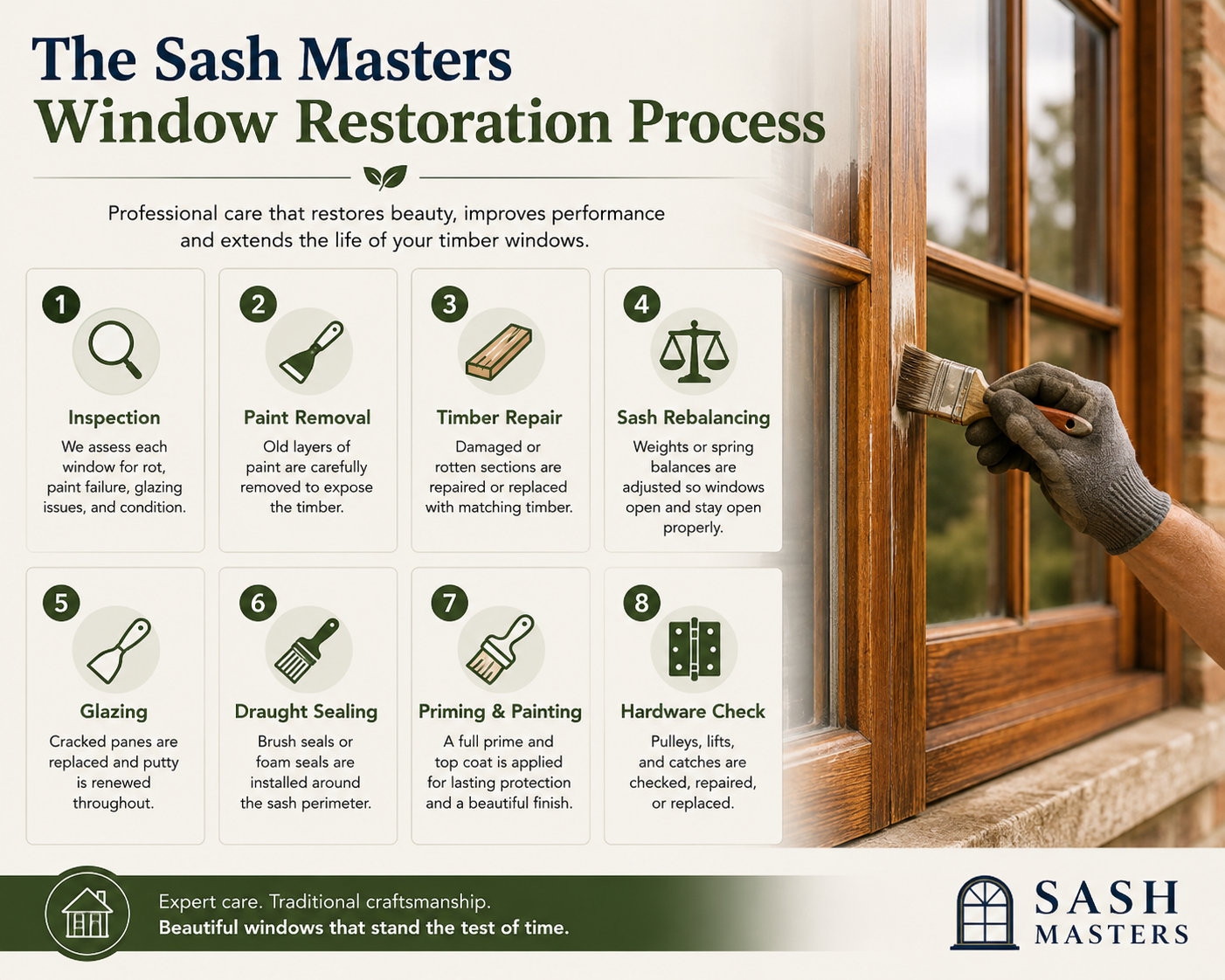
If your windows need professional attention, here is how the restoration process typically works:
- Inspection — the team assesses each window for rot, paint failure, glazing issues, and cord condition
- Paint removal — old layers of paint are carefully stripped back to expose the timber
- Timber repair — any damaged or rotten sections are filled with epoxy filler or replaced with matching timber
- Sash rebalancing — weights or spring balances are adjusted so windows open and stay open properly
- Glazing — cracked panes are replaced and putty is renewed throughout
- Draught sealing — brush seals or foam seals are installed around the sash perimeter
- Priming and painting — a full prime and top coat is applied for lasting protection
- Hardware check — pulleys, lifts, and catches are cleaned, repaired, or replaced
How Much Does Timber Window Maintenance Cost in Sydney?
The cost of maintaining restored timber windows depends on several factors:
- Number of windows and their size
- Condition of the paintwork and putty
- Whether draught seals need replacing
- Age and type of glazing
- Whether any timber repair is required
For routine seasonal maintenance touch-up painting, cleaning, lubricating hardware most homeowners spend very little each year. The bigger costs come when maintenance is skipped and damage builds up.
Cost Guide (General) • DIY seasonal check and touch-up: $0–$80 in materials • Professional draught proofing (per window): $150–$300 • Sash cord replacement (per window): $150–$250 • Full professional restoration (per window): $400–$900+ • Full replacement (per window): $800–$2,000+
Note: Prices vary depending on window size, condition, and access. Get a quote from Sash Masters for an accurate assessment. |
Common Mistakes to Avoid
These are the most frequent mistakes Sydney homeowners make with their timber windows:
- Painting over bare timber without priming paint won’t stick and will fail within a season
- Using interior-grade paint on exterior windows it breaks down quickly in sun and rain
- Forcing a swollen window this damages the frame and can crack the glass
- Ignoring small paint chips they allow moisture in and lead to rot under the surface
- Skipping the bottom rail this is the most vulnerable part of any timber sash window
- Using silicone sealant as a substitute for glazing putty it looks different, doesn’t last as long, and is harder to repaint
- Leaving draught seals until they fall out by then, draughts and moisture have already caused damage
- Painting over sash cords they lose flexibility and break faster
Keep Your Windows in Great Shape Get Help from Sash Masters
Restored timber windows are one of the best features a Sydney home can have. They’re durable, full of character, and when properly maintained they last a very long time.
The seasonal checklist above gives you a clear, simple routine to follow throughout the year. Stick to it and you’ll avoid the bulk of the problems that cause timber windows to deteriorate.
If you’ve noticed signs of wear, moisture damage, swelling, or failing paint on your windows or if they haven’t had a professional check in a few years it’s worth getting an expert eye on them before small issues become expensive ones.
Sash Masters is a Sydney-based company specialising in timber window restoration, sash window repair, draught proofing, heritage window restoration, window glazing, and door restoration. The team works with homeowners across Sydney from period terraces to federation homes to modern renovations to keep original windows in the best possible condition.
Frequently Asked Questions
How often should I maintain my restored timber windows?
How long does timber window restoration last?
Can I maintain my timber sash windows myself?
Yes most seasonal checks and minor tasks like cleaning, light painting, and lubricating hardware are easy DIY jobs. However, tasks like sash cord replacement, re-glazing, and draught proofing are better done by a professional to make sure they’re done correctly and last longer.
What should I do if my window is swelling shut after rain?
Don’t force it. Let the timber dry out naturally over a few days. Once dry, the window should open again. If it continues to swell and stick, the paint protection may have failed and the timber is absorbing moisture this needs professional attention before it leads to rot.
Does draught proofing affect how timber windows look?
Not at all. Professional draught proofing uses slim brush seals that sit neatly inside the sash channel. They are invisible when the window is closed and do not affect the appearance or operation of the window. This is particularly important for heritage homes in Sydney where the character of the window needs to be preserved.