
How Long Do Timber Windows Last? A Sydney Climate Perspective

Quick Summary
- What it covers: The lifespan of timber windows in Sydney’s unique climate
- Who it’s for: Homeowners with older timber or sash windows, especially in heritage properties
- Typical lifespan: 50–100+ years with proper care; as little as 20–30 years without maintenance
- Key actions: Annual maintenance, timely repairs, draught proofing, and re-painting every 5–7 years
Introduction
Timber windows are built to last but only if they’re looked after. In Sydney’s climate, where summers are hot and humid and winters bring steady rain, timber windows face a lot of stress year-round. So how long do timber windows actually last?
With regular care and timely repairs, timber windows can last well over 100 years. Many homes across Sydney, particularly heritage properties, still have original windows that are 80 or 90 years old and still working well. But left unattended, the same windows can deteriorate in as little as two to three decades.
This guide walks you through what affects lifespan, how Sydney’s weather plays a role, and what you can do to get the most out of your windows.
How Long Do Timber Windows Typically Last?
Short answer: A well-maintained timber window lasts between 50 and 100+ years. A neglected one may need replacing after 20–30 years.
Timber is a surprisingly durable material when it’s properly sealed, painted, and maintained. The issue isn’t the timber itself, it’s moisture. When water gets in through cracked paint, failed putty, or poor seals, it causes timber to swell, rot, and eventually break down.
Here’s a rough guide:
Condition | Expected Lifespan |
Well maintained, painted regularly | 80–100+ years |
Occasional maintenance, minor repairs done | 50–70 years |
Rarely maintained, paint peeling | 20–40 years |
No maintenance, exposed timber | 10–20 years |
The good news? Even windows that look rough on the outside can often be saved with restoration and for a fraction of the cost of full replacement.
How Does Sydney’s Climate Affect Timber Windows?
Sydney’s weather creates a few specific challenges for timber windows that you don’t get in drier climates.
Heat and UV exposure Sydney summers are intense. The UV radiation bleaches and breaks down paint coatings faster than in cooler parts of Australia. Once paint starts to peel or crack, moisture gets in.
Humidity and rainfall Sydney gets around 1,200mm of rain per year and has high humidity, especially in coastal suburbs. This combination is one of the most damaging things for timber. Moisture causes swelling, which leads to windows that stick or don’t close properly and over time, to rot.
Temperature cycling Hot days followed by cooler nights cause timber to expand and contract repeatedly. Over years, this weakens joints, loosens glazing putty, and opens up gaps in the frame.
Salt air in coastal areas If you live in suburbs close to the water Manly, Bondi, Balmoral, or similar salt air accelerates paint degradation and can corrode metal hardware faster.
These aren’t reasons to replace timber windows. They’re reasons to maintain them properly and know what to watch for.
What Are the Most Common Problems That Shorten Lifespan?
Knowing the warning signs early can save you significant money. Here are the most common issues that cut a timber window’s life short:
- Paint failure — Cracking, bubbling, or peeling paint is the number one entry point for moisture. If left unaddressed, water gets behind the paint and into the timber.
- Glazing putty breakdown — The putty around the glass holds the pane in place and seals out water. When it dries out and crumbles (common in older windows), draughts and leaks follow.
- Timber rot — Usually found in sill corners or bottom rails. Early-stage rot can be repaired; advanced rot may require timber replacement or section splicing.
- Stuck or binding sashes — Often caused by paint build-up or swelling from moisture. Homeowners sometimes force these open, which damages the frame and the sash cords.
- Draught gaps — Over time, the seals between the sash and frame wear away. This makes the home harder to heat or cool and allows water ingress during heavy rain.
- Broken or failed sash cords — On double-hung sash windows, broken cords mean the sash won’t stay open or won’t move at all.
Many Sydney homeowners discover these problems gradually. A window that’s “just a bit sticky” this year can become a rotting sill by next year if left alone.
Repair vs Replace: Which One Should You Choose?
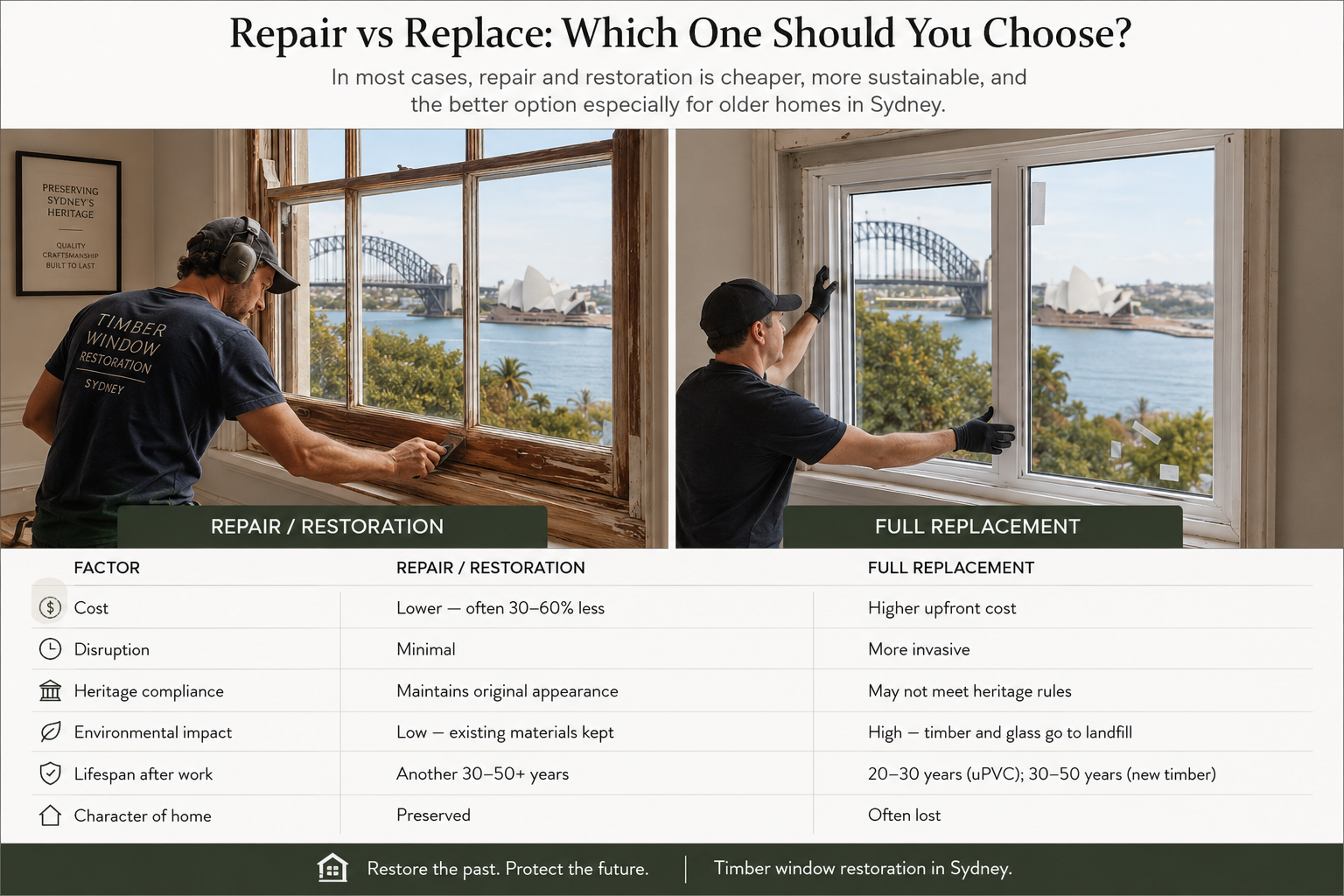
Short answer: In most cases, repair and restoration is cheaper, more sustainable, and the better option especially for older homes in Sydney.
This is one of the most common questions homeowners ask. Here’s a simple comparison:
Factor | Repair / Restoration | Full Replacement |
Cost | Lower — often 30–60% less | Higher upfront cost |
Disruption | Minimal | More invasive |
Heritage compliance | Maintains original appearance | May not meet heritage rules |
Environmental impact | Low existing materials kept | High timber and glass go to landfill |
Lifespan after work | Another 30–50+ years | 20–30 years (uPVC); 30–50 years (new timber) |
Character of home | Preserved | Often lost |
When to choose restoration:
- Timber is structurally sound or has localised rot only
- Windows are in a heritage-listed property or heritage conservation area
- You want to preserve the original look and character of your home
- Budget is a consideration
When replacement might be needed:
- Timber is rotted through, beyond practical repair
- Frames are structurally compromised at multiple points
- You’re upgrading to double glazing and the existing frames can’t accommodate it
For most Sydney homeowners with older homes, window restoration is the sensible choice. In heritage-listed properties, full replacement is often not permitted anyway council approval is required, and like-for-like matching can be very difficult.
What Does Timber Window Restoration Actually Involve?
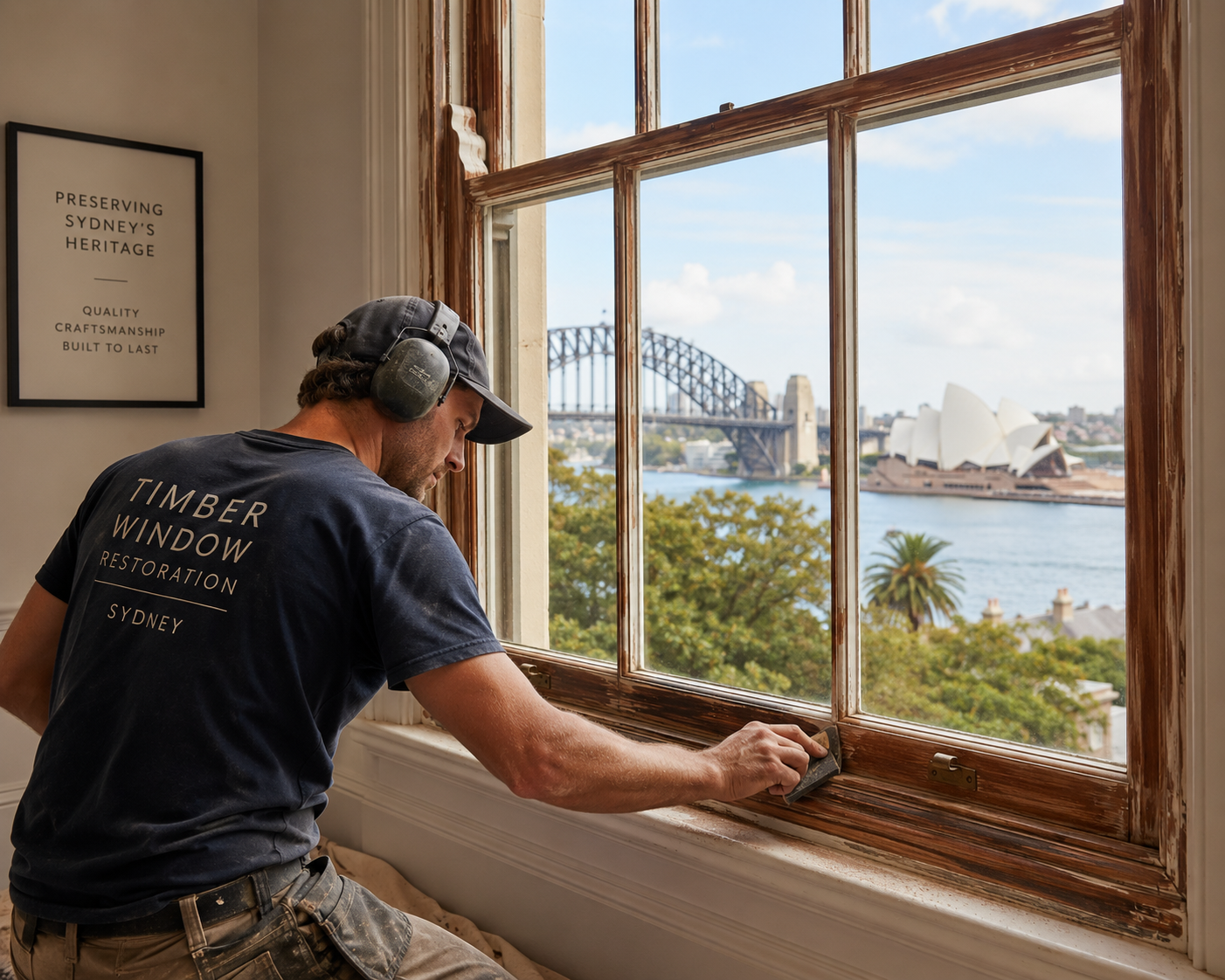
Many people aren’t sure what “restoration” actually means. Here’s the typical process used by Sash Masters for a full timber window restoration in Sydney:
- Inspection — Assess the condition of frames, sashes, glazing, hardware, and sash cords
- Paint removal — Strip back old paint to bare timber to reveal the actual condition underneath
- Timber repair — Fill, splice, or replace any sections affected by rot or damage
- Re-glazing — Remove old putty, re-bed the glass, and apply fresh glazing compound
- Sash cord replacement — Fit new cords and balance the weights so the window operates smoothly
- Draught proofing — Fit draught seals between the sash and frame to stop air and water infiltration
- Priming and painting — Apply primer and quality exterior paint to protect the timber
- Hardware check — Clean, oil, or replace locks, pulleys, and catches as needed
A well-restored window doesn’t just look better, it performs better, seals better, and can last another 50 years or more.
How Does Draught Proofing Extend Window Lifespan?
Draught proofing is one of the most underrated things you can do for your windows and it does more than just keep cold air out.
When gaps exist between the sash and frame, a few things happen:
- Rain and condensation can track inside through the gaps
- The moisture softens and degrades the timber over time
- You lose energy through both heat transfer and air flow
By fitting quality draught seals, you close those gaps. This keeps moisture out, reduces the thermal stress on the timber, and stops the constant movement that opens gaps further.
For Sydney homes particularly older Federation or Edwardian-era properties, draught proofing is often the single best bang-for-buck improvement you can make to your windows. Homeowners regularly report lower energy bills and noticeably less noise from traffic and weather after the work is done.
What About Heritage Windows? Do They Need Special Treatment?
Yes and this is an area where getting it wrong can cause real problems.
Many older Sydney properties, especially those built between 1890 and 1940 have double-hung timber sash windows. These are a defining feature of Federation, Edwardian, and interwar architecture. In a heritage conservation area, you generally can’t replace these with modern windows without council approval.
Beyond the regulatory aspect, heritage windows are often made from old-growth hardwood timbers that are denser and more durable than what’s available today. This makes restoration genuinely worthwhile if you’re working with better material than you’d get in a modern replacement.
Heritage window restoration requires:
- Matching original timber species where repairs are needed
- Using traditional techniques like re-glazing with linseed oil putty
- Retaining original hardware where possible
- Painting in appropriate colours and finishes
Sash Masters works with heritage properties across Sydney and understands both the practical and regulatory requirements involved.
Tips to Make Your Timber Windows Last Longer
You don’t need to spend a fortune to protect your windows. Most of the work is simple and routine:
- Paint every 5–7 years — Don’t wait for the paint to fail completely. Repainting on a regular cycle is far cheaper than repairing what moisture damage causes.
- Check and replace glazing putty — If it’s cracked or missing in sections, address it promptly. It’s inexpensive to fix early and very expensive to ignore.
- Keep sills clear of water pooling — Make sure sills are painted and sloped to drain. Standing water on a sill is a fast track to rot.
- Don’t paint over draught seals or sash cord channels — This causes windows to stick and is one of the most common avoidable problems.
- Clean and oil hardware annually — Locks, stays, and pulleys last much longer with minimal maintenance.
- Look for signs of rot each year — Probe sill corners and bottom rails with a screwdriver. Soft or spongy timber needs attention.
How Much Does Timber Window Restoration Cost in Sydney?
Short answer: Most restoration jobs in Sydney range from $400 to $1,200 per window depending on condition and work required.
Cost factors include:
- Condition of the timber — Minimal rot means less work; extensive damage takes more time
- Number of windows — Most tradespeople offer better rates when doing multiple windows at once
- Type of work — A full restoration including re-glazing, draught proofing, and repainting costs more than a basic repair
- Access requirements — Upper-storey windows require scaffold or elevated access, which adds cost
- Heritage requirements — Specialist materials and techniques can add to the price
Even at the higher end, restoration is almost always cheaper than replacement. A quality replacement timber window fitted in Sydney typically starts around $1,500–$2,500 per window and that’s before the cost of removing the old ones.
How long do timber windows last in Sydney?
With regular maintenance and timely repairs, timber windows in Sydney can last 80 to 100 years or more. Poorly maintained windows may deteriorate in 20 to 30 years. Sydney’s humidity and UV exposure make consistent upkeep especially important.
Is it worth restoring old timber windows rather than replacing them?
In most cases, yes. Restoration typically costs 30–60% less than replacement, preserves the character of the home, and can extend the window’s life by another 30–50 years. For heritage properties, restoration is often the only viable option under council rules.
How do I know if my timber windows need restoration or full replacement?
If the timber is structurally sound and rot is localised, restoration is usually the right call. If frames are rotted through at multiple points or structurally compromised, replacement may be necessary. A professional inspection will give you a clear answer.
What is draught proofing and does it really help?
Draught proofing means fitting seals between the sash and frame to close air gaps. It reduces heat loss, stops moisture from tracking in, and makes windows noticeably quieter. It’s one of the most cost-effective improvements you can make to older windows.
How often should timber windows be repainted in Sydney?
Every 5 to 7 years is a reasonable rule of thumb in Sydney’s climate. Windows on north or west-facing walls that get more sun exposure may need attention closer to the 5-year mark.
Conclusion: Get the Most from Your Timber Windows
Timber windows are worth looking after. In Sydney’s climate, the difference between a window that lasts a century and one that fails after 25 years often comes down to regular maintenance and catching problems early.
If your windows are sticking, draughty, showing peeling paint, or have sections of soft timber, it’s worth getting a professional assessment before the situation worsens.
Sash Masters is a Sydney-based company specialising in timber window restoration, sash window repair, heritage window work, draught proofing, and window glazing. With experience across a wide range of Sydney homes from Federation terrace houses to interwar bungalows and modern properties the team can assess your windows honestly and let you know exactly what’s worth fixing and what isn’t.