
Vacuum Glazing vs Secondary Glazing: Which Is Right for Your Heritage Home?

Quick Summary
- What it is: Two different ways to improve the thermal and acoustic performance of heritage windows without replacing them.
- Who it’s for: Owners of heritage or period homes with original timber windows — particularly in Sydney.
- Cost range: Secondary glazing from ~$300–$900 per window | Vacuum glazing from ~$800–$1,500+ per window.
- Time required: Secondary glazing 1–2 days | Vacuum glazing 2–5 days depending on scope.
Why Glazing Matters for Heritage Homes
If you own an older home in Sydney, you’ve probably felt the cold creeping in through your single-glazed timber windows. Or maybe the street noise is driving you mad. Either way, you’ve started looking into glazing options and the two names that keep coming up are vacuum glazing and secondary glazing.
So, which one is right for your heritage home? It’s not a simple answer. Both options have real strengths, but they work differently and suit different homes. In this guide, we break down exactly what each option does, how they compare, what they cost, and when to choose one over the other.
Sash Masters is a Sydney-based company specialising in timber window restoration, sash window repair, and heritage glazing upgrades. We work with homeowners and heritage property owners across Sydney every day.
What Is Vacuum Glazing?
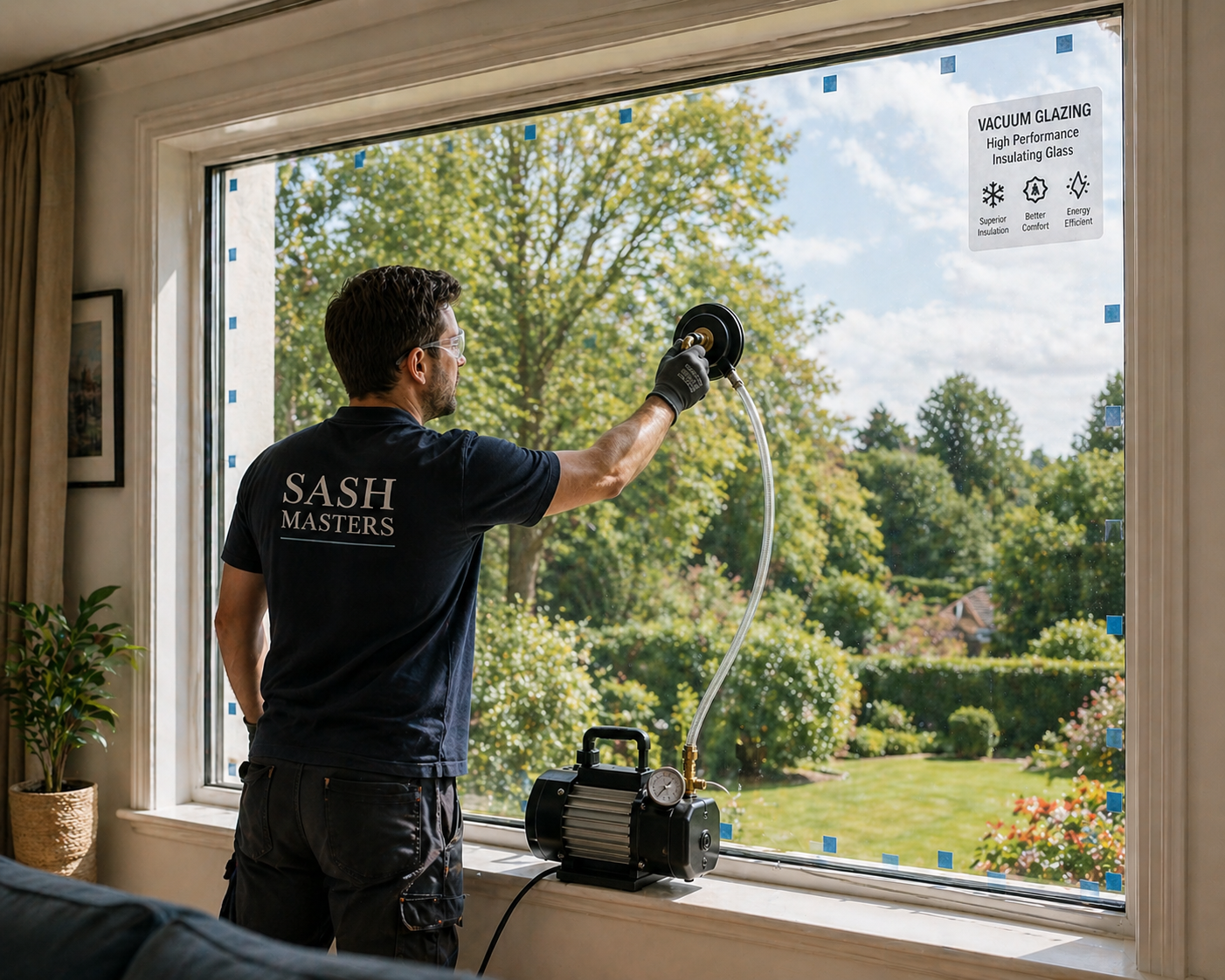
Vacuum glazing is a modern type of high-performance glass that replaces your existing single-pane glass while fitting inside your original window frame. It is the thinnest, most thermally efficient glazing technology available today.
How Does Vacuum Glazing Work?
It uses two panes of glass with a near-vacuum sealed between them. Because there’s almost no air in the gap, heat and sound have very little to travel through. The result is exceptional thermal performance from a unit that’s only about 8–9mm thick.
One of the most well-known vacuum glazing products in Australia is Glavenir, a Japanese-made vacuum glazing unit distributed locally. Glavenir is designed specifically for heritage windows because it can be fitted into existing slim frames without any structural modifications.
Key Features of Vacuum Glazing (Glavenir):
- Ultra-slim profile — around 8.3mm thick
- Excellent thermal insulation — U-values as low as 0.4 W/m²K
- Can be retrofitted into your existing timber sash frame
- No noticeable change to the external appearance of your windows
- Long lifespan — 25+ years when correctly installed
Real example: A homeowner in Paddington with a Federation-era home wanted to reduce heat loss but couldn’t change the windows due to heritage listing. Vacuum glazing (Glavenir) was fitted directly into their existing sash frames, the same look from the street, dramatically warmer inside.
What Is Secondary Glazing?
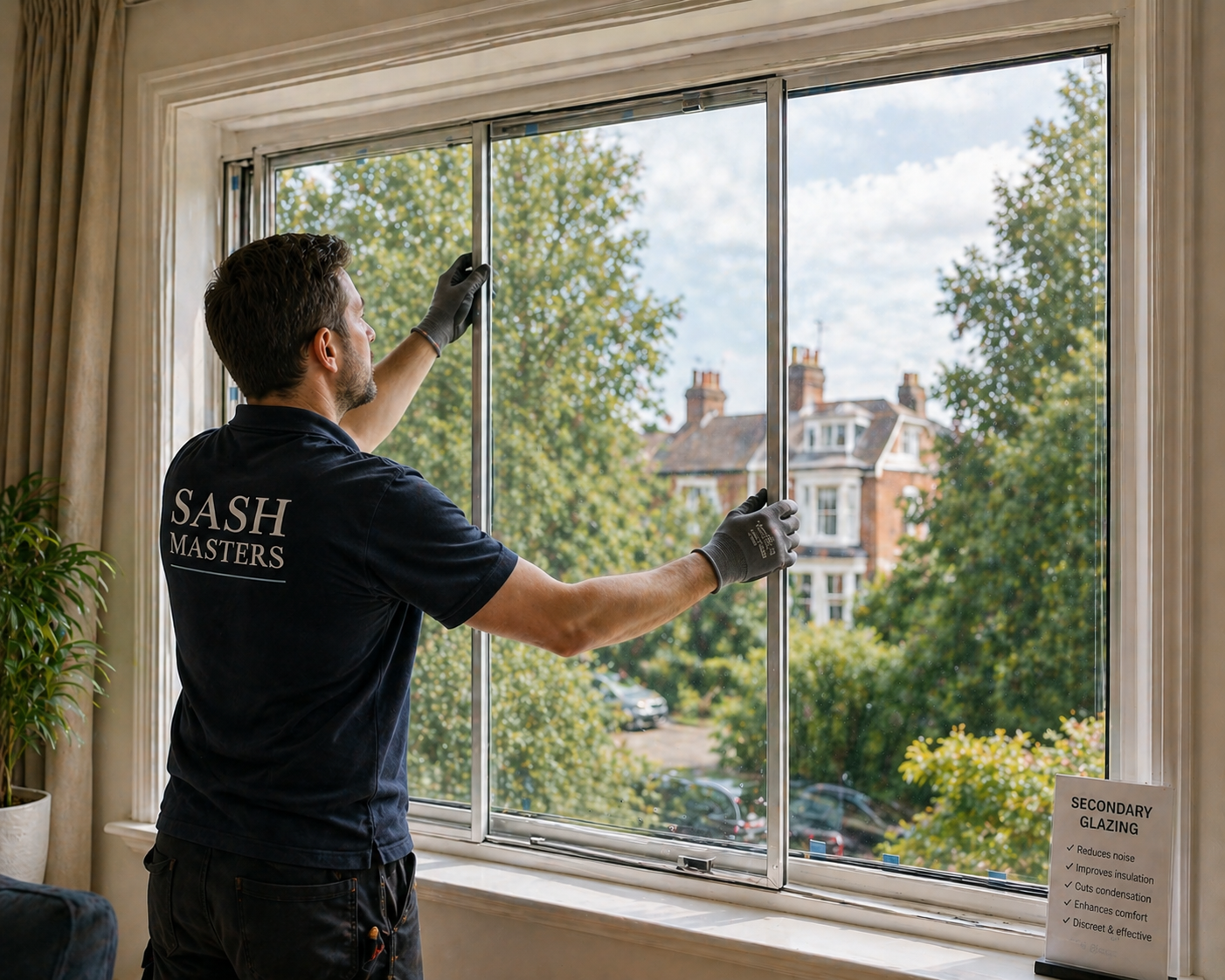
Secondary glazing involves adding a second independent window frame on the inside of your existing window. It creates an air gap between the original glass and the new inner pane similar to how double glazing works, but without modifying the original window.
How Does Secondary Glazing Work?
A slim internal frame (usually aluminium or timber) is fitted to the inside of your window reveal. It holds a second pane of glass or acrylic. The gap between the two panes which can range from 20mm to 100mm traps air and acts as an insulating buffer.
Key Features of Secondary Glazing:
- More affordable upfront than vacuum glazing
- Excellent acoustic performance — the larger the air gap, the better the sound reduction
- Fully reversible — can be removed without damaging the original window
- Works well on windows that aren’t in perfect condition
- Wide range of styles — hinged, sliding, lift-out panels
Real example: A landlord in Glebe with a Victorian terrace fitted secondary glazing to reduce road noise for tenants. The original windows stayed completely intact. The acoustic difference was immediate.
Vacuum Glazing vs Secondary Glazing: Side-by-Side Comparison
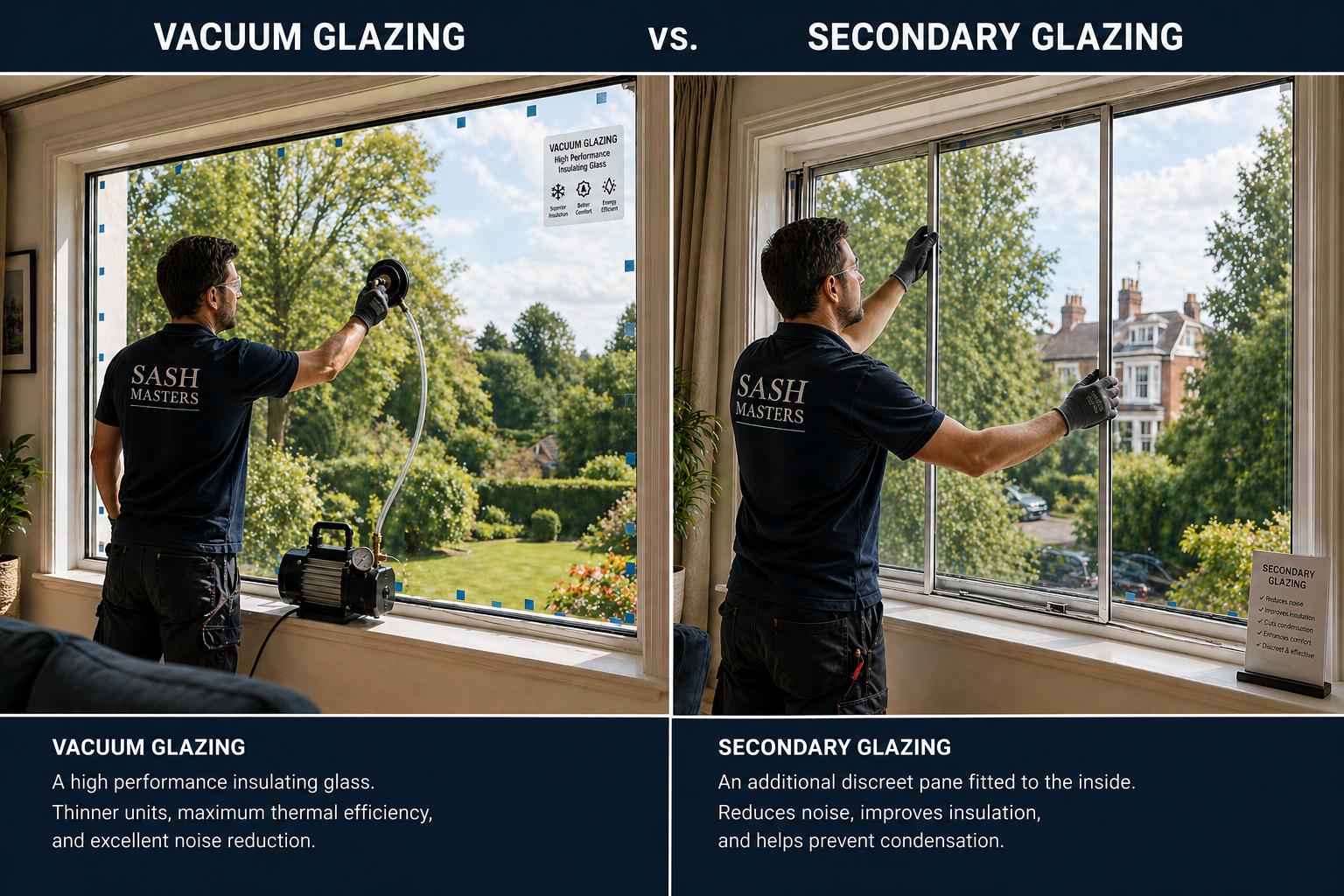
Here’s a direct comparison to help you decide:
Factor | Vacuum Glazing (Glavenir) | Secondary Glazing |
Glass thickness | ~8.3mm (slim profile) | 20–100mm (frame + air gap) |
Heritage compatibility | Excellent – fits original frame | Good – adds second frame inside |
Thermal performance | Very high (U-value ~0.4–0.7) | High (U-value ~1.2–1.8) |
Acoustic reduction | Moderate (~35–38 dB) | High (~42–45 dB) |
Installation disruption | Low – replaced in existing frame | Medium – new frame fitted inside |
Cost (per window, approx) | $800–$1,500+ | $300–$900+ |
Reversibility | Not reversible | Fully removable |
Best for | Heritage homes needing slim look | Rentals, high noise areas, budget projects |
Heritage Compatibility: Which Option Protects Your Home’s Character?
This is often the deciding factor for Sydney homeowners with heritage-listed properties or period homes.
Vacuum Glazing for Heritage Homes
Vacuum glazing is the gold standard for heritage windows. Because it replaces only the glass, not the frame, the window looks identical from the outside. Council and heritage officers generally accept this approach because it doesn’t alter the appearance or fabric of the building.
- Retains original timber frame and sash profile
- No new internal frames that break the sight lines
- Approved for use in many heritage-listed properties in Sydney
- Ideal for Federation, Victorian, and Edwardian-era homes
Secondary Glazing for Heritage Homes
Secondary glazing is also considered heritage-compatible; it doesn’t remove or alter the original window. However, because it adds a visible internal frame, it does change how the window looks from the inside.
- Original window remains completely untouched
- Heritage councils generally accept it as reversible
- Internal frame can be noticeable, especially in smaller rooms
- Good option when the original glazing is not in great condition
Important: Always check with your local council or heritage officer before making any changes to a listed property. Sash Masters can advise on what’s typically approved in Sydney.
How Much Does It Cost in Sydney?
Cost is one of the biggest questions homeowners ask. Here’s a realistic breakdown:
Vacuum Glazing (Glavenir) Cost
- Cost per window: approximately $800 to $1,500+
- Factors: window size, number of panes, frame condition, accessibility
- Note: The glass unit itself is precision-manufactured, which adds to cost
- Long-term savings: Significant reduction in heating and cooling bills
Secondary Glazing Cost
- Cost per window: approximately $300 to $900+
- Factors: frame type (aluminium vs timber), window size, opening style required
- More budget-friendly for large numbers of windows
- Worth considering for investment properties or rental homes
Keep in mind: the right choice isn’t always the cheapest one. If you have a prized Federation home in Balmain or a listed cottage in the Blue Mountains, vacuum glazing may protect both the character and the value of your property far better than secondary glazing.
The Installation Process: What to Expect
Vacuum Glazing Installation Steps
- Detailed inspection of existing frames and glass
- Careful removal of original single-pane glass
- Timber repairs if needed (rot, damage, putty work)
- Vacuum glazing unit measured, ordered, and fitted
- Re-puttying and sealing for weather tightness
- Final check and clean
Typical timeframe: 2–5 days depending on the number of windows and any repairs required.
Secondary Glazing Installation Steps
- Site assessment of reveal depth and frame condition
- Custom secondary frame measured and fabricated
- Frame fitted to inside of existing window reveal
- Glass or acrylic panels installed into secondary frame
- Seals and draught strips fitted
- Final operation test and clean
Typical timeframe: 1–2 days for most homes.
Is It Better to Repair or Replace Windows Before Glazing?
Great question and one we get asked all the time at Sash Masters.
Before any glazing upgrade, your timber windows need to be in sound condition. Cracked or rotten frames, broken sash cords, or frames so swollen with paint they won’t open these all need to be fixed first.
Signs Your Windows Need Repair Before Glazing:
- Sashes that won’t open or close properly
- Visible rot or soft timber in the frame
- Broken sash weights or cords (sash windows)
- Extreme paint build-up sealing the window shut
- Gaps or draughts around the frame
At Sash Masters, we often combine timber window restoration with a glazing upgrade in a single visit. Fix the frame, upgrade the glass, one job, one disruption, better outcome.
Tip: Draught proofing your sash windows at the same time as glazing is a highly cost-effective move. It closes the small gaps in the sash channels where air leaks in and makes a noticeable difference to comfort and energy bills.
Who Is This Service For?
Both vacuum glazing and secondary glazing are worth considering if you are:
- An owner of a heritage or period home with original timber windows
- Dealing with cold rooms, condensation, or draughts in winter
- Frustrated by road or neighbour noise coming through single glazing
- Unable to replace windows due to heritage restrictions
- Wanting to improve energy efficiency without altering the building’s character
Vacuum glazing is particularly well-suited to homeowners who want the best thermal result with the most discreet outcome. Secondary glazing suits those who need a more budget-conscious solution or want the ability to reverse the installation in the future.
Common Mistakes to Avoid
- Choosing based on price alone: Vacuum glazing costs more upfront but delivers better long-term performance and heritage compatibility. Weigh the total value.
- Skipping frame repairs: Fitting glazing into rotten or poorly functioning frames wastes money and leads to callbacks.
- Not checking heritage requirements: Some councils have strict rules. What’s allowed in one suburb in Sydney may not be approved in another.
- Ignoring draught proofing: Glazing helps but if your sash channels and staff beads are leaking air, you’ll still feel the cold.
- DIY attempts on heritage glass: Vacuum glazing units especially are precision-made and must be installed correctly. A poor seal destroys the vacuum and the performance.
Frequently Asked Questions
What is the difference between vacuum glazing and secondary glazing?
Vacuum glazing replaces the existing single glass pane with a high-performance vacuum unit, keeping the original frame intact. Secondary glazing adds a second frame and pane on the inside of the existing window. Both improve thermal and acoustic performance but vacuum glazing is slimmer, more thermally efficient, and less visually intrusive.
Is Glavenir vacuum glazing approved for heritage-listed homes in Sydney?
In many cases, yes. Because Glavenir fits within the existing frame and doesn’t change the external appearance, heritage councils in Sydney have generally accepted it. However, you should always confirm with your local council before proceeding. Sash Masters can assist with this process.
How much does secondary glazing cost per window in Sydney?
Secondary glazing typically costs between $300 and $900 per window in Sydney, depending on size, frame material, and whether an opening panel is required. Vacuum glazing (such as Glavenir) starts from around $800 to $1,500+ per window. Both figures vary based on the specific job conditions.
Can I combine window restoration with a glazing upgrade?
How long does vacuum glazing last?
Quality vacuum glazing units like Glavenir are designed to last 25 years or more when correctly installed. The vacuum seal is the critical component which is why professional installation by experienced glaziers is essential.
Ready to Upgrade Your Heritage Windows?
Choosing between vacuum glazing and secondary glazing comes down to your budget, your heritage obligations, and what matters most thermal performance, acoustic improvement, or cost-effectiveness.
If you want the best outcome with the least visual impact, vacuum glazing (Glavenir) is hard to beat. If budget is the main driver or you need the option to reverse the installation, secondary glazing is a smart, practical choice.
Either way, the results will be noticeable warmer rooms, less noise, lower energy bills, and windows that last another generation.
Sash Masters is a Sydney-based window restoration company with deep experience in heritage glazing upgrades, sash window repair, draught proofing, and timber window restoration. We work across Sydney from the Inner West to the Northern Beaches, Eastern Suburbs to the Hills District.